Baby Lotion vs Baby Cream After Bath
At a glance
Baby lotion and baby cream differ mostly by formula texture, richness, residue, spread, package, and routine friction. A directory can explain those comparison points, but baby post-bath pages must avoid turning format choice into infant-care instruction or product suitability.
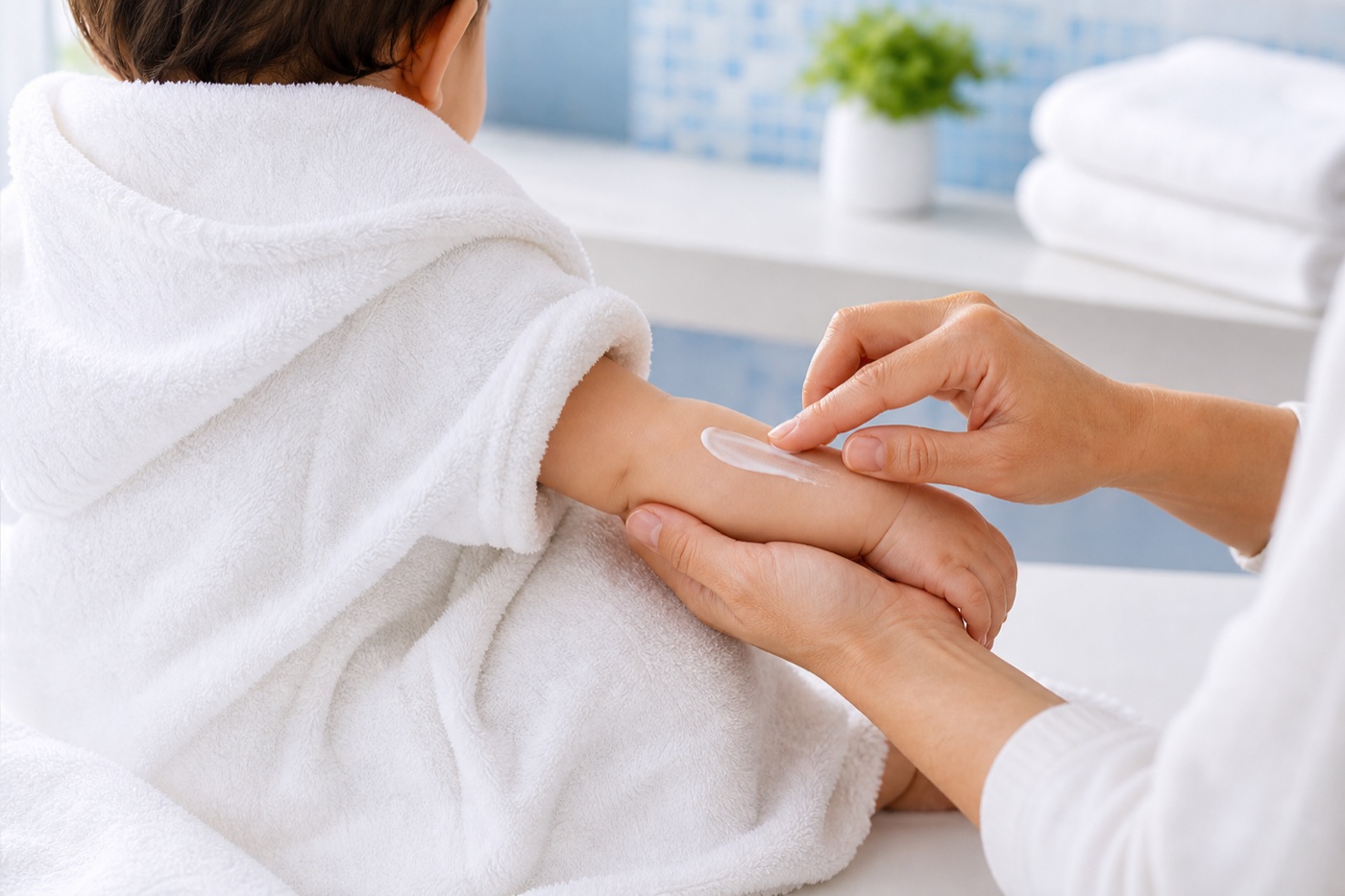

- Audience route: baby post-bath formula comparison and caregiver routine searches.
- Evidence grade: A/B/C/D.
- Claim risk: High.
Short answer
Baby lotion and baby cream differ mostly by formula texture, richness, residue, spread, package, and routine friction. A directory can explain those comparison points, but baby post-bath pages must avoid turning format choice into infant-care instruction or product suitability.
Why this question matters
- Parents often compare lotion and cream immediately after bath because cold touch, slippery feel, thick texture, and dressing speed all matter.
- This search often overlaps with eczema-adjacent moisturizing and fragrance-free label questions.
- The directory needs a careful comparison node that routes to sources rather than giving baby-care instructions.
Question routing
- Route baby post-bath context to AAD, Mayo Clinic, and National Eczema Association public education sources.
- Route formula texture to baby lotion, body cream, ointment, and humectant-emollient-occlusive pages.
- Route fragrance-free, preservative-free, or eczema-adjacent wording to source notes and claim boundaries.
- Route warming or cold-touch questions to contact temperature and baby-lotion warming boundaries.
What evidence can support
- A source-linked comparison of lotion versus cream feel and routine friction.
- A route for why thick formulas may be harder to apply after bath.
- A boundary between caregiver language and infant-care claims.
What evidence cannot support
- That lotion or cream is universally better after a baby bath.
- That either format treats or eczema prevention-adjacent outcomes.
- That warming a baby lotion or cream is compatible without product-specific evidence.
Claim boundary
Allowed: Explain label meaning, formula format, routine friction, texture, residue, scent, contact feel, or source-backed public education context.
Needs evidence: Any baby, eczema-adjacent, product suitability, fragrance, preservative, warmed-use, or routine-outcome claim needs source review.
Needs testing: Finished formula, packaging, contact temperature, repeated handling, and user-context review when temperature or compatibility is discussed.
Not established: That one label, ingredient, texture, or routine habit proves better outcomes, broad user suitability, measured absorption, barrier change, or formula compatibility.
Avoid: Do not turn this answer into a product recommendation, medical guidance, infant-care instruction, pregnancy guidance, or universal compatibility statement.
Source links
- Mayo Clinic baby eczema
- National Eczema Association moisturizing
- AAD everyday care
- Post-bath moisturizing timing
- Baby lotion claims boundary
- Eczema-adjacent claim boundary
- AAD public everyday-care source
- FDA cosmetics labeling claims
- ISO/TR 18811 cosmetic stability guidance
- AAD moisturizer use for childhood eczema
- Mayo Clinic baby eczema
- National Eczema Association moisturizing
- PubMed immediate and delayed moisturization
- FDA cosmetics labeling claims
- Cosmetic claims boundary
- Directory methodology
- EU cosmetic claims common criteria
- ISO cosmetic stability testing guidance
- Mayo Clinic dry skin